Before 2008, most government documents on BPA stated that humans are not exposed to BPA in amounts that cause adverse health effects. Currently, government agencies worldwide are still telling the public not to be concerned; however, government actions suggest there is cause for concern. Since 2009 and 2010, governments in many countries have taken actions to limit exposure to Bisphenol-A. The most regulation has been seen with banning the use of BPA in baby products such as pacifiers and baby bottles. Before 2008, most governments felt that no action should be taken concerning BPA; however, most have started to take action. Studies performed by scientists in non-government institutions have concluded that health effects of BPA should be of concern. Before 2008, the government only relied on their own studies which did not agree with other scientific studies. Now, some governments are changing their mind regarding BPA.
After thinking about this for some time, I have realized that most studies only compare one source of BPA exposure(e.g. baby bottles) to the total exposure limit. However, exposure does not come from one source. In fact, BPA is everywhere from cutting boards, silverware, cups, food storage containers, cans, water bottles, pacifiers, medical instruments/utensils, plastic bags/sandwich bags, and pizza boxes only to name a few. It is not accurate to look at BPA exposure from plastic bottles, compare it to the exposure limit, and declare that exposure to BPA is safe. The fact is that people will be exposed to different levels of BPA given their specific environment. Blood tests show that most of the population is exposed to levels over the exposure limit. This means that the population is exposed to levels of BPA that will cause harm. I am speculating that this may be the reason why some governments have changed their minds regarding BPA exposure; however, they have not publicly stated that exposure of BPA is a concern.
Why haven't governments publicly expressed the concern that their actions imply? Well, BPA is used in almost everything and is an important chemical in industry. Furthermore, BPA-free containers use phthalates which cause similar adverse health effects. So, the government does not have an apparent answer to solve the problem. They are taking small steps in reducing BPA exposure and trying not to raise too much concern from the public.
What are the actions countries are taking?
Canada:
According to an article in a Times Magazine blog, on October 13, 2010, Canada declared BPA as a toxic substance to the environment and humans. This declaration does not completely ban the use of BPA, but it does allow Canada to ban the use of BPA in specific products such as baby bottles. The article is available at this link.
Japan:
In the years of 1998 through 2003, industries in Japan reduced the use of BPA in their products. This reduction was voluntary and not forced by government regulations. Chemicals other than BPA were used for tableware and can linings. The effort produced a reduction of BPA exposure from cans and silverware of 0.3-0.5 micrograms/kilogram per day per person and a 0.6 micrograms/kilogram per day reduction from drink bottles. This information was obtained from an organization of scientists, engineers, and policy experts called Environmental Working Group which reports on scientific studies and their own laboratory tests on environment and health issues http://www.ewg.org/node/20938. The information has been confirmed by a risk assessment document from the National Institute of Advanced Industrial Science and Technology: Research Center for Chemical Risk Management located in Japan. The risk assessment is available here.
United States:
Currently, the United States as a country has not passed regulation on the use of BPA in products; however, some states have proposed bans and regulations. The U.S. Food and Drug Administration (FDA) only has some concern about BPA, but is supporting the choice of the industry's production of BPA free baby bottles and infant feeding cups. The FDA also supports efforts to reduce the use of BPA in cans. An article on the FDA's website can be accessed here.
Sources:
The information obtained for this blog was gathered from a variety of popular press and government documents. I am not very familiar with the integrity of the Environmental Working Group; however, the information from their site matches information from a Japanese research center.
Sunday, April 3, 2011

Monday, March 21, 2011
Polystyrene Containers and the Leaching of Chemicals
BPA and phthalates are not the only chemicals known to leach from plastic containers. A study by Maqbool Ahmad was published in the Journal of Environmental Sciences in 2006 that discusses this matter. The study is summarized below.
Containers Most Apt to Leach Chemicals
 Polystyrene (PS)
 - Styrofoam (e.g. coffee cups)
- Poly vinyl chloride (PVC)
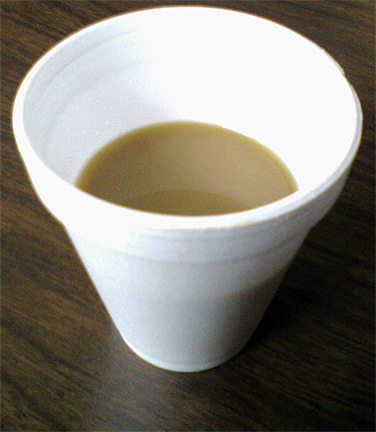
These chemicals are found in egg cartons, styrofoam coffee cups/hot beverage cups, reusable plastic cutlery(utensils).
Chemicals that Leach
- Styrene
- Aromatic compounds such as ethyl benzene, toluene, and benzene (only small amounts).
Factors that effect Leaching
- contact area
- type of plastic
- temperature
- contact time
Levels of Styrene Detected
The maximum amount of styrene leaching from containers made out of polystyrene was 29.5 micrograms/liter. After one year of storage, this amount increased to 69.53 micrograms/liter.
Health Effects of Styrene Exposure
Styrene can cause several health problems. Small quantities of styrene over long-term exposure have been proven to cause fatigue, nervousness, sleeplessness, low platelet and hemoglobin values, chromosomal and lymphatic abnormalities, and cancerous effects. It also also been concluded that styrene can bind with DNA which results in cancerous tumors.
Sources:
Ahmad, Maqbool, and Ahmad S. Bajahlam. "Leaching of Styrene and Other Aromatic Compounds in Drinking Water from PS Bottles." Journal of Environmental Sciences 19 (2007): 421-26. Scifinder. Web. Mar. 2011.
I decided to use this source because it provides information on additional chemicals that leach from plastic. It was published in a scientific journal and is unbiased due to review in the scientific community. The study was performed in Saudi Arabia and shows a world-wide concern about the use of plastics.
Do Plastic Containers Really Leach BPA?
In my post from February 5, 2011, I discussed a study that revealed detectable levels of BPA in humans. You may be wondering; however, how people know whether BPA actually leaches from plastic. Scientists use a variety of instrumental analyses to find the answers to such questions. That is they use instruments that are specifically designed to determine concentrations of a particular substance.
My Experience with Instrumental Analysis
Last semester I took an Instrumental Analysis class at the university that gave me first hand experience with the matter. The class involved writing standard operating procedures for spectroscopy instruments as well as developing and carrying out an experiment using one of the instruments. Spectroscopy instruments are used to detect the individual chemical components in a sample. Because of these instruments, levels of chlorine and lead can be detected in water. They are also used by detectives and crime scene investigators in analyzing evidence. The instrument I worked with was a Gas Chromatography-Mass Spectrometer which is the same instrument many scientists use to detect BPA. My experiment involved detecting benzene levels in gasoline samples from various gas stations. The gas samples had to be stored in glass containers and could not be in contact with plastic of any sort. Plastic could not come into contact with the samples because BPA and phthalates from the plastic would leach into the sample and interfere with the benzene analysis.
Several experiments have been conducted using Gas Chromatography-Mass Spectrometry (GCMS) to study the leaching of BPA from plastic.
One article in the Food Additives and Contaminants journal titled, "Migration of bisphenol A from plastic baby bottles, baby bottle liners and reusable polycarbonate drinking bottles" by C. Kubwabo et al discusses results of a BPA leaching test performed with GCMS.
Specifics of the Study
This experiment was carried out to simulate effects of repeated use and washing of baby bottles. A variety of temperatures and exposure times were also used.
Results of the Study
The study concludes that the amount of BPA that leaches from plastic can vary depending on time and temperature. BPA leaches into food/drink at higher concentrations with increased temperature and time. At higher temperatures, chemical reactions speed up allowing for increased interaction of BPA and food. Therefore, it is not a good idea to heat plastics or to store heated food/drink in plastic containers.
Results of the study conclude that containers made out of polycarbonate (PC) leached a BPA concentration range of 0.11 micrograms/liter to 2.39 micrograms/liter. Leaching at the higher levels occurred in foods high in alcohol and fat (baby formula was considered a fatty food for this study). Non-PC container samples only contained barely traceable amounts of BPA. The study concludes that 1) BPA leaches from PC containers and 2) non-PC and glass containers are safer for use than PC containers.
Sources:
My Experience with Instrumental Analysis
Last semester I took an Instrumental Analysis class at the university that gave me first hand experience with the matter. The class involved writing standard operating procedures for spectroscopy instruments as well as developing and carrying out an experiment using one of the instruments. Spectroscopy instruments are used to detect the individual chemical components in a sample. Because of these instruments, levels of chlorine and lead can be detected in water. They are also used by detectives and crime scene investigators in analyzing evidence. The instrument I worked with was a Gas Chromatography-Mass Spectrometer which is the same instrument many scientists use to detect BPA. My experiment involved detecting benzene levels in gasoline samples from various gas stations. The gas samples had to be stored in glass containers and could not be in contact with plastic of any sort. Plastic could not come into contact with the samples because BPA and phthalates from the plastic would leach into the sample and interfere with the benzene analysis.
Any scientist with knowledge about spectroscopy instruments will tell you that samples should never come in contact with plastic because of leaching.
Several experiments have been conducted using Gas Chromatography-Mass Spectrometry (GCMS) to study the leaching of BPA from plastic.
One article in the Food Additives and Contaminants journal titled, "Migration of bisphenol A from plastic baby bottles, baby bottle liners and reusable polycarbonate drinking bottles" by C. Kubwabo et al discusses results of a BPA leaching test performed with GCMS.
Specifics of the Study
This experiment was carried out to simulate effects of repeated use and washing of baby bottles. A variety of temperatures and exposure times were also used.
Results of the Study
The study concludes that the amount of BPA that leaches from plastic can vary depending on time and temperature. BPA leaches into food/drink at higher concentrations with increased temperature and time. At higher temperatures, chemical reactions speed up allowing for increased interaction of BPA and food. Therefore, it is not a good idea to heat plastics or to store heated food/drink in plastic containers.
Results of the study conclude that containers made out of polycarbonate (PC) leached a BPA concentration range of 0.11 micrograms/liter to 2.39 micrograms/liter. Leaching at the higher levels occurred in foods high in alcohol and fat (baby formula was considered a fatty food for this study). Non-PC container samples only contained barely traceable amounts of BPA. The study concludes that 1) BPA leaches from PC containers and 2) non-PC and glass containers are safer for use than PC containers.
Sources:
Kubwabo, C., I. Kosarac, B. Stewart, K. Lalonde, and P.J. Lalonde. "Migration of Bisphenol A from Plastic Baby Bottles, Baby Bottle Liners and Reusable Polycarbonate Drinking Bottles." Food Additives and Contaminants 26.6 (2009): 928-37. Scifinder. Web. Mar. 2011.
I used this source because it was published in a scientific journal and reviewed by the scientific community. It uses controls and accepted scientific practices. The data/results for this study are also comparable to similar studies done on BPA. Therefore, it is a highly reliable source.
Sunday, February 27, 2011
Document from the U.S. Department of Health and Human Services
 |
| John R. Bucher, Ph.D |
Monday, February 21, 2011
BPA Exposure Underestimated
"There are a range of molecules that are natural, and some are incredible toxins. But when we start to make molecules that are not known to nature, we need to think a little more carefully about how they are going to interact with biological systems." - Zoeller (University of Massachusetts, Amherst)
This quote was obtained from an article in The New York Times titled, Study: Human Exposure to BPA 'Grossly Undersestimated'. The article was posted on September 20, 2010 and can be viewed at this link. Additional information from the article is discussed below:
Exposure Limits:
- Bisphenol A(BPA) can be found in 90% of the American population
- According to the U.S. Environmental Protection Agency(EPA), the human exposure limit for BPA is 50 micrograms per kilogram of body weight.
- It has been found that the average person is exposed to 400 micrograms per kilogram of body weight.
Since most people do not think in terms of micrograms and kilograms, let's do some math.
50 micrograms = 0.00005 grams = 1.10x10⁻⁷ pounds BPA1 kilogram = 1000 grams = 2.20 pounds of body weight
1.10x10⁻⁷ pounds BPA /2.20 pounds of body weight = 5.00x10⁻⁸ pounds BPA per pound of body weight
A person weighing 150 pounds should only take in 7.50x10⁻⁶ pounds of BPA or 0.003 grams of BPA.
BPA Mimics Estrogen
- BPA is an "endocrine disrupter" because it mimics estrogen in the body.
- The estrogen receptor, male hormone receptor, and thyroid receptor can be bound by BPA.
- BPA's first use was as a "man-made estrogen substitute". This is why it resembles estrogen.
Two Studies of BPA
In 2002, a German scientist from the University of Wurzburg named Wolfgang Volkel conducted the only BPA study performed on humans. According to his study, 99% of BPA in the blood is removed by the liver. He also concluded that it is excreted from the human body in six hours. However, many researchers "say the the method Volkel used to measure BPA in the blood was not sensitive enough and that he likely overestimated the ability of the chemical to pass through without causing harm."
A recent study by a biologist from the University of Missouri named Julia Taylor was performed on mice and monkeys. The method she used is more sensitive for measuring BPA levels. Blood samples revealed that "biologically active" amounts of BPA were found in the mice and monkeys. She concluded that BPA circulates in the blood because the liver is not able to completely remove it. Furthermore, the BPA levels in blood "are cause for concern".
BPA and Politics
 |
| Dianne Feinstein |
While the article is not from a scientific journal, it uses evidence from scientific articles and studies. So, it uses strong evidence. The article is also unbiased because it discusses the subject from multiple viewpoints and considers several sources. The article gains credibility from being published in The New York Times, a widely accepted newspaper. However, the evidence was interpreted by a newspaper journalist instead of someone who has first hand knowledge of the subject. Some information obtained from the evidence is likely to be left out of the article in order to fulfill the journalist's arguments. Overall, the evidence provided in the article is reliable.
Saturday, February 12, 2011
Bisphenol A and Ethics
The controversy over Bisphenol A has led to many studies. These studies have been performed by industrial companies and government agencies. In some studies, the results seem inconclusive. They do not always reveal what actions should be taken next. The interpretation of the results for a study depends on the scientist who performs it; therefore, there will be studies concluding that Bisphenol A is harmful while others conclude that it is not. It is also no surprise that most studies funded by industrial companies will be interpreted with a bias towards Bisphenol A being safe.
Anything in excess can act as a poison in the human body. Even water, the very thing that all life depends on, can be harmful if consumed in excess. The focus on BPA should not be arguing about whether it is harmful or not, because in high levels it no doubt will be. Instead, the focus should be on finding the proper limits of exposure. In addition, all possible actions should be taken to limit exposure. Toxicology studies have been performed on mice, rats, rabbits, and guinea pigs. While these toxicology studies might tell us the exposure limits for small animals, they do not directly tell us the appropriate limits of exposure for humans. It would be unethical to test exposure limits on humans. So, we have a dilemma. In the case of a dilemma, one looks at both the positive and negative consequences. From these considerations, it is the obligation of those in charge to take an ethical action.
What ethical actions should take place?
Additional Research
While researching, I found the National Toxicology Program which is part of the Department of Health and Human Services. The National Toxicology Program aides the Food and Drug Administration in setting exposure limits. On their website they post toxicology reports and emails that they receive from the public. I came across one email that makes several excellent points.
The website for the National Toxicology Program can be viewed here.
Click here to view the email.
Anything in excess can act as a poison in the human body. Even water, the very thing that all life depends on, can be harmful if consumed in excess. The focus on BPA should not be arguing about whether it is harmful or not, because in high levels it no doubt will be. Instead, the focus should be on finding the proper limits of exposure. In addition, all possible actions should be taken to limit exposure. Toxicology studies have been performed on mice, rats, rabbits, and guinea pigs. While these toxicology studies might tell us the exposure limits for small animals, they do not directly tell us the appropriate limits of exposure for humans. It would be unethical to test exposure limits on humans. So, we have a dilemma. In the case of a dilemma, one looks at both the positive and negative consequences. From these considerations, it is the obligation of those in charge to take an ethical action.
What ethical actions should take place?
- When in doubt, it is better to err on the safe side. In 2008, Canada banned Bisphenol A from being used in baby bottles. An article in the Washington Post discussing this can be viewed here. The article discusses why Canada decided to act as they did. The article also discusses the steps the United States and individual companies have taken as a result.
- The public should be informed of the products they are buying. Products that contain BPA should have a warning label. Just as consumers have the right to know the nutritional information of products, consumers have the right to know what chemicals were used to make it. Consumers should also be aware of which plastics are designed for one time use or multiple use.
Additional Research
While researching, I found the National Toxicology Program which is part of the Department of Health and Human Services. The National Toxicology Program aides the Food and Drug Administration in setting exposure limits. On their website they post toxicology reports and emails that they receive from the public. I came across one email that makes several excellent points.
The website for the National Toxicology Program can be viewed here.
Click here to view the email.
Saturday, February 5, 2011
First Academic Post: Bisphenol A
 Recently, I found an article in a scientific journal called Reproductive Toxicology. The article is titled Human Exposure to Bisphenol A (BPA) by Lauren Vandenberg Et al. It discusses several studies dealing with BPA that the authors have come across. By looking at the results of all of the compiled studies, the authors have determined which findings are most evidently accurate. The basics of BPA and the conclusions formed will be summarized from the article.
Production and Use of BPA
According to the article, over six billion pounds of BPA are produced worldwide every year. BPA is used in many products including "polycarbonate plastics, epoxy resins used to line metal cans, and in many plastic consumer products including toys, water pipes, drinking containers, eyeglass lenses, sports safety equipment, dental monomers, medical equipment and tubing, and consumer electronics"(Vandenberg).
Detection of BPA
BPA has been detected in humans through testing the following:
- Urine
- Amniotic fluid
- Follicular fluid
- Placental tissue
- Umbilical cord blood
Conclusions of BPA Studies
BPA Levels in Human Tissues and Fluid
The article concluded that 90% of humans even children and pregnant women have detectable levels of BPA in their body. Studies show that levels of BPA in humans are between 0.3-4.4 ng/ml. Samples taken from umbilical cords reveal that a developing fetus is subjected to approximately 1-3ng/ml of BPA. The article suggests that studies should be done to detect BPA levels in fat and organ tissue so that they can be compared to BPA levels in serum. This would provide further information on the bioaccumulation of BPA. Since studies of BPA levels in humans have only been done on people living in developed countries, the authors feel that these studies should also been done in less developed countries.
BPA Found in Environmental Sources
Studies conclude that BPA is released into the air, dust, and water from landfills. This is caused by the disposing of products containing BPA into landfills. The article explains that there is "extensive evidence that many of these products leach BPA under normal conditions of use"(Vandenberg).
The Metabolism of BPA in Humans and Animals
It has been concluded that BPA rapidly metabolises in humans and animals. Soon after exposure to BPA, (most likely from the presence of BPA in food) BPA can be directly detected in blood and urine samples. However, evidence suggests that animals and humans do not metabolise BPA the same way. More testing should be done that specifically focuses on the metabolism of BPA.
Why I Considered this Article as a Source
This article is a reliable source because it objectively compares the results of multiple studies instead of relying on just one study. It was published in a scientific journal where it has been peer reviewed and cited in 118 scientific articles since 2007. The authors are from the Tufts University of Medicine and the University of Missouri-Columbia; therefore, their research was not biased by a political, industrial, or commercial agenda.
Sources:
Laura, Vandenberg N., Hauser Russ, Marcus Michele, Olea Nicolas, and Welshons V. Wade. "Human Exposure to Bisphenol A (BPA)." Reproductive Toxicology 24 (2007): 139-77. Web of Science. Web. 31 Jan. 2011.
To view the abstract for this article click here.
Subscribe to:
Posts (Atom)